A laboratory preparing for accreditation needs more than completed forms and a quality manual. It must clearly define its proposed scope, demonstrate technical competence and maintain records that support the activities it intends to offer. Choosing the appropriate laboratory accreditation body is an important step in understanding the applicable requirements and preparing for assessment.
For quality managers and technical teams in India, a structured preparation process can help identify documentation gaps, avoid unnecessary rework and clarify assessment expectations. explains the scope requirements, essential documents, assessment evidence and important questions laboratories should consider before approaching an accreditation body.
What Does a Laboratory Accreditation Body Cover?
A laboratory accreditation body evaluates whether a laboratory is competent to perform specific testing, calibration or medical laboratory activities against applicable accreditation requirements.
Accreditation is generally scope-specific. It does not automatically cover every service offered by a laboratory. Instead, the evaluation considers the particular tests, calibrations, methods, measurement ranges and technical activities included in the proposed scope.
For example, a testing laboratory performing chemical analysis of drinking water may apply for accreditation covering selected parameters and test methods. Its accreditation scope would need to identify the relevant activities rather than simply state that it provides water testing services.
A laboratory should understand the following before preparing its application:
- Type of laboratory: Testing, calibration or medical laboratory.
- Applicable standard: ISO/IEC 17025:2017 for testing and calibration laboratories or ISO 15189:2022 for medical laboratories, as applicable.
- Proposed scope: Tests, parameters, methods, measurement ranges and relevant locations.
- Technical competence: Personnel qualifications, equipment, facilities and method validation or verification.
- Quality documentation: Procedures, records and quality management system requirements.
Understanding these elements helps the laboratory prepare an application that reflects its actual technical capabilities.
Who Needs Laboratory Accreditation?
Laboratory accreditation is relevant to organisations that need to demonstrate the competence and reliability of their testing, calibration or medical laboratory activities.
The requirements differ according to the laboratory’s operations.
Testing Laboratories
Testing laboratories examine samples, materials, products or substances to determine their characteristics. These may include chemical, physical, microbiological and environmental testing activities.
Calibration Laboratories
A calibration laboratory establishes the relationship between measurement values provided by a measuring instrument and reference standards under specified conditions.
Calibration lab accreditation requires evidence that the laboratory can perform its proposed calibration activities competently, with appropriate measurement procedures, equipment and traceability arrangements.
Medical and Diagnostic Laboratories
Medical laboratories examine human samples to provide information relevant to patient diagnosis, monitoring and treatment. Their accreditation preparation should reflect the requirements of ISO 15189:2022, where applicable.
Medical Device Testing Laboratories
Organisations conducting medical device testing should define the specific devices, characteristics, test methods and applicable requirements covered by their proposed scope. Medical device testing lab accreditation requires evidence that the laboratory has the necessary technical resources and competence for those activities.
Documents to Check Before Assessment
Documentation is one of the most important parts of the laboratory accreditation process. Missing, outdated or inconsistent records can create difficulties during document review and technical assessment.
Before submitting an application, quality managers should organise the following documents.
| Document category | What the laboratory should check |
| Quality manual | Documented management system and quality policies |
| Scope of accreditation | List of tests, parameters, methods and measurement ranges |
| Standard operating procedures | Approved procedures for laboratory activities |
| Personnel records | Qualifications, training, experience and competency records |
| Equipment records | Equipment identification, calibration and maintenance history |
| Method records | Method validation or verification evidence |
| Quality control records | Internal quality control and monitoring results |
| Proficiency testing | Relevant proficiency testing or inter-laboratory comparison records |
| Sample management | Sample receipt, identification, handling and storage procedures |
| Internal audit | Audit programme, findings and corrective action records |
| Management review | Review records and decisions regarding system effectiveness |
These records should reflect actual laboratory practices. Maintaining documents only for assessment purposes, without evidence of implementation, may create gaps during evaluation.
Evidence to Prepare for Laboratory Accreditation
A laboratory must demonstrate that its documented procedures are implemented and that its personnel can perform the activities included in the proposed scope.
A useful preparation approach is to organise evidence under four main categories.
1. Technical Competence
Maintain records demonstrating that personnel have the required qualifications, experience and technical knowledge. Competency evaluations should be relevant to the activities assigned to individual staff members.
2. Equipment and Calibration Records
Prepare equipment inventories, calibration certificates, maintenance records and intermediate performance checks, wherever applicable.
For a laboratory applying for calibration lab accreditation, measurement traceability and the suitability of reference standards are particularly important considerations.
3. Method Validation and Verification
Maintain evidence showing that test and calibration methods are suitable for their intended applications. Laboratories should also document any relevant method changes and authorisations.
4. Quality Assurance Activities
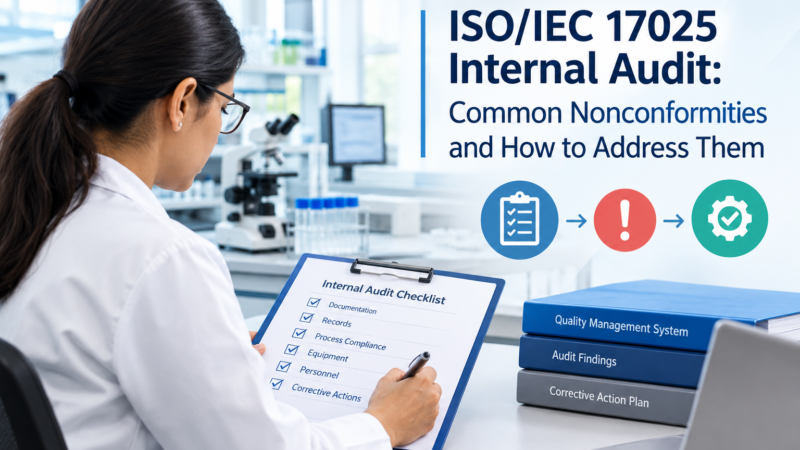
Keep records of internal quality control, proficiency testing, inter-laboratory comparisons, internal audits and corrective actions, as applicable to the laboratory’s scope.
These records help demonstrate that quality controls are part of regular operations rather than activities performed only before an assessment.
Understanding ISO 17025 and ISO/IEC 17025 Requirements
The ISO/IEC 17025 standard establishes requirements for the competence, impartiality and consistent operation of testing and calibration laboratories. It provides the framework used to evaluate whether laboratories can generate valid and reliable results.
Laboratories planning accreditation under ISO 17025 should pay attention to:
- Competence and responsibilities of laboratory personnel.
- Impartiality and confidentiality.
- Equipment suitability and measurement traceability.
- Selection, verification and validation of methods.
- Handling of test and calibration items.
- Technical records and reporting of results.
- Internal audits and management reviews.
- Corrective actions and continual improvement.
Medical laboratories should consider ISO 15189:2022, which specifies requirements for quality and competence in medical laboratory operations.
The applicable standard should be confirmed before starting the application. A testing laboratory should not automatically follow medical laboratory requirements, or vice versa.
Questions to Ask Laboratory Accreditation Agencies Before Applying
Before selecting among laboratory accreditation agencies, laboratory management should understand the accreditation body’s scope, application requirements and assessment arrangements.
The following questions can help avoid confusion:
- Does the accreditation body cover the laboratory’s specific technical field?
- Which standard and edition apply to the proposed scope?
- What application forms and supporting documents are required?
- Are separate applications needed for different laboratory locations?
- What are the applicable assessment stages?
- How are non-conformities communicated and addressed?
- What are the current application and assessment fees?
- What are the requirements for maintaining accreditation after it is granted?
These questions are especially relevant for laboratories applying for multiple technical fields or planning to expand their scope.
How FDASindia Supports the Laboratory Accreditation Process
The Federation for Development of Accreditation Services (FDAS) provides accreditation information for testing, calibration and medical laboratories.
Its published Information Brochure (FDAS 100) outlines applicable requirements, scope definition and the evaluation of laboratory competence. The brochure also advises applicants to apply for parameters for which the necessary resources and competence are available.
Laboratories considering FDAS accreditation can review its published information and clarify the following before applying:
- Whether their proposed activities fall within the applicable accreditation scope.
- Which standard and supplementary criteria apply.
- What documentation must accompany the application.
- Which technical records should be available for assessment.
- What requirements apply to corrective actions and continued accreditation.
FDASindia is based in Gurgaon, Haryana, and provides information for laboratories across India. Applicants should consult the latest applicable documents rather than relying solely on older application guidance.
Also read: Lab Teams and iso 15189 2022: Accreditation Applicant Questions
Next Steps Before Submitting an Application
A laboratory should complete an internal readiness review before submitting its application. The review should identify documentation gaps, confirm the proposed scope and ensure that technical personnel understand the applicable requirements.
A practical checklist includes:
- Finalise the proposed accreditation scope.
- Confirm the applicable standard and its current edition.
- Review the quality management system documentation.
- Organise personnel competency and equipment records.
- Check method validation and verification evidence.
- Review internal audit and management review records.
- Identify pending corrective actions.
- Clarify application requirements with the accreditation body.
Taking these steps can help laboratory management approach the assessment process with better clarity and fewer avoidable documentation issues.
For laboratories planning accreditation, FDASindia can be contacted to understand the applicable scope and application requirements. Contact the Federation for Development of Accreditation Services.
Call +91 8448278215 / Email: fdasindia@hotmail.com for further information.