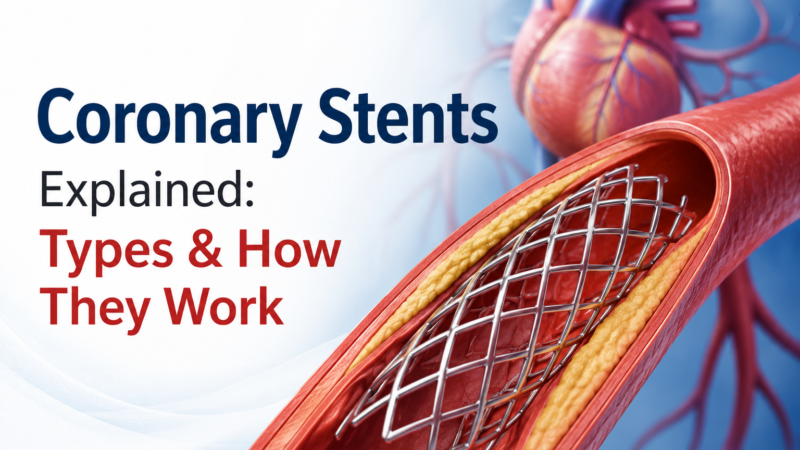
Being told you may need a stent can feel like a decision made for you in a single appointment. It does not have to be. If you have been advised to undergo Coronary Angioplasty, you have time to ask questions, compare options, and choose a path you understand. This article covers when the procedure helps, when a second opinion makes sense, and what protects your heart in the years afterward.
When a Blocked Artery Needs More Than a Quick Decision: Coronary Angioplasty
A coronary artery disease diagnosis means fatty deposits have narrowed the vessels that feed your heart. Some narrowings cause chest pressure on walking, breathlessness, or unusual tiredness. Others cause no symptoms at all.
That difference matters. A blocked artery on a report is not automatically an emergency, and not every narrowing needs a stent. Your symptoms, test results, and daily life all shape the right plan.
Consider a 58-year-old who feels tightness climbing stairs, and whose angiogram shows a narrowed vessel. Another person of the same age has a similar finding but no symptoms. These two may reasonably be advised differently.
How Angioplasty Works
In Angioplasty in Heart procedures, a doctor guides a thin tube to the narrowed artery and inflates a tiny balloon to widen it. A small mesh tube, called a stent, is usually left in place to keep the artery open. This is also known as percutaneous coronary intervention (PCI), and you may see it listed as a PTCA Stent procedure. Many people search for it as “chip angioplasty,” but the term simply refers to placing a stent coronary device inside the vessel.
Angiography vs. Angioplasty
These two are often confused. Angioplasty and Angiogram are related but different:
- Coronary angiography is a diagnostic test. Dye and X-ray imaging show where arteries are narrowed.
- Angioplasty is the treatment that opens the narrowing.
Sometimes both happen in one sitting. Ask your doctor beforehand whether the angiography results alone would lead to a stent, so you are not surprised on the table.
Why a Second Opinion Is a Sensible Step
A second opinion is not a sign of distrust. For a procedure involving your heart, it is ordinary due diligence. It is especially worth considering when:
- you have no symptoms, or only mild ones
- the angiography report shows several narrowings and the plan is unclear
- the advice is to proceed immediately, but you are not in an emergency
- you want to understand whether medical therapy and PCI could be compared for your case
Bring your angiography images and reports to the visit. A coronary artery disease doctor can review them independently and explain whether medicines, lifestyle changes, a stent, or bypass surgery fits best.
Medical Therapy and PCI: Not Always Either/Or
Many people assume a stent is the cure. In reality, stable heart disease is often managed with a combination of daily medicines, diet, exercise, and monitoring. A stent opens one narrowing, but it does not stop plaque from forming elsewhere.
Asking “Can we try medical therapy first, and what would make you recommend PCI instead?” is a fair question. A thoughtful answer will refer to your symptoms, your scan results, and your risk, not a one-size-fits-all rule.
What to Look For in Doctor Qualifications and Your Care Team
People searching for the best angioplasty expert in India often focus on reputation alone. A more useful checklist looks at substance:
- Doctor qualifications: formal cardiology training and specific experience in interventional procedures
- Care team: cardiac nurses, technicians, and anesthesia support who work together regularly
- Hospital facilities: a cath lab, intensive cardiac care, and emergency backup if something unexpected happens
- Communication: a doctor who explains risks and alternatives in plain language
Coronary artery disease specialists and any coronary heart disease doctor you consult should welcome these questions. If an angioplasty expert in India rushes your decision or avoids explaining alternatives, treat that as a signal to pause.
Patients in Telangana looking for guidance often consult Dr C. Raghu, a top 10 cardiologist in Hyderabad, for a clear review of their reports and options before making a decision.
Protecting Your Heart After the Procedure
Angioplasty is a starting point, not a finish line. Long-term heart health depends on what happens next:
- Take prescribed medicines consistently. Stopping blood-thinning medicines early can put a new stent at risk, so never stop without medical advice.
- Attend follow-up visits. Regular checks help catch changes early.
- Move daily. Many people begin with short walks, building up as their doctor advises.
- Eat for your arteries. More vegetables, whole grains, and less fried and processed food support heart health.
- Manage the basics. Blood pressure, blood sugar, cholesterol, and smoking all influence whether arteries narrow again.
A person who had a stent placed and then returned to the same habits has treated one blockage but not the cause. The ones who do best usually treat the procedure as a turning point.
Questions to Bring to Your Next Appointment
- Is my case urgent, or do I have time to consider options?
- Would medical therapy be reasonable for me, and for how long?
- What are the specific risks in my situation?
- What will recovery look like, and when can I return to work?
- Who will manage my care after the procedure?
Writing these down before the visit keeps the conversation focused and helps you leave with answers.
Also read : Second Opinion for Heart Valve Surgery
Your Next Step
Coronary Angioplasty can relieve symptoms and protect your heart when it is truly needed, and choosing it with confidence matters as much as the procedure itself.
If you have a recommendation for a stent and want clarity, bring your reports and book a consultation with Dr C Raghu, a best cardiologist in Hyderabad, to discuss your options today.