TRANSPORTATION • GREEN TECHNOLOGY
India Launches Its First Hydrogen-Powered Train, Accelerating the Journey Toward Sustainable Rail Transport
India’s railway network enters a new era as the country’s first hydrogen-powered train begins operations, highlighting the government’s commitment to clean mobility, lower carbon emissions, and next-generation transportation infrastructure.
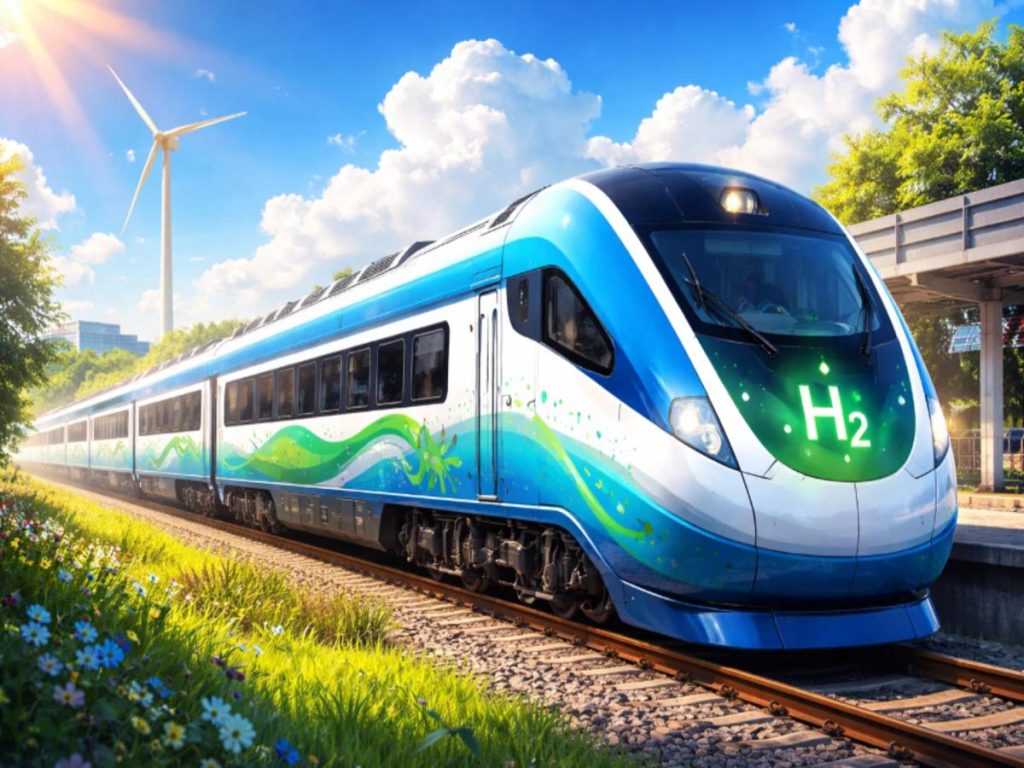
A Historic Milestone for Indian Railways
India has officially entered the hydrogen mobility era with the launch of its first hydrogen-powered train. The project represents an important step in modernizing one of the world’s largest railway networks while reducing dependence on diesel-powered locomotives. The initiative supports India’s long-term objective of creating cleaner, smarter, and more energy-efficient transportation systems.
The new train demonstrates how alternative fuels can play a major role in reducing greenhouse gas emissions while maintaining reliable public transportation. Hydrogen-powered trains emit only water vapor during operation, making them a promising solution for sustainable rail travel.
“Hydrogen-powered transportation represents the next chapter in India’s clean mobility transformation.”
How Hydrogen Trains Work
Unlike conventional diesel locomotives, hydrogen trains generate electricity through fuel cells.
Inside the train, hydrogen stored in high-pressure tanks reacts with oxygen from the atmosphere inside a fuel cell. This electrochemical process produces electricity that powers electric traction motors while emitting only water and heat as by-products.
The system offers several advantages over traditional diesel engines:
- Zero tailpipe carbon emissions
- Quiet operation
- Improved energy efficiency
- Lower maintenance requirements
- Reduced air pollution
- Suitable for non-electrified railway routes
Hydrogen technology is expected to complement India’s existing railway electrification program by providing a clean alternative where overhead electric infrastructure is unavailable.
Why This Matters for India
Indian Railways operates one of the world’s largest transportation networks, carrying millions of passengers every day.
Transitioning to cleaner technologies offers several long-term benefits:
- Lower fuel consumption
- Reduced dependence on imported fossil fuels
- Cleaner air around railway corridors
- Lower operating costs over time
- Support for India’s Net Zero ambitions
- Growth of the domestic hydrogen economy
The launch also strengthens India’s position among countries investing in next-generation green transportation technologies.
Hydrogen and India’s Clean Energy Mission
The railway initiative aligns closely with India’s broader clean-energy strategy, which includes investments in renewable energy, green hydrogen, battery storage, and low-carbon industrial development. The government continues to expand renewable electricity generation while encouraging innovation in sustainable mobility and energy infrastructure.
Green hydrogen—produced using renewable electricity—is expected to become an important energy source for transportation, heavy industry, and power generation over the coming decade.
Opportunities for the Rail Industry
Hydrogen-powered rail technology opens new opportunities for:
- Advanced railway engineering
- Fuel-cell manufacturing
- Hydrogen production facilities
- Clean transportation research
- Smart railway infrastructure
- Green employment opportunities
Industry experts believe these developments could stimulate innovation across multiple sectors while supporting India’s transition toward a low-carbon economy.
Challenges Ahead
Despite its enormous potential, hydrogen rail technology still faces several practical challenges.
These include:
- Developing hydrogen refueling infrastructure
- Scaling affordable green hydrogen production
- High initial investment costs
- Safety standards and storage technology
- Expanding nationwide deployment
- Building a reliable supply chain
As production costs decline and infrastructure expands, hydrogen-powered transportation is expected to become increasingly competitive.
Looking Ahead
The launch of India’s first hydrogen-powered train marks more than a technological achievement—it signals the beginning of a broader transformation in sustainable transportation.
Combined with renewable energy, smart infrastructure, and continued innovation, hydrogen-powered railways could play a significant role in reducing emissions while improving energy security and modernizing public transport.
As India continues investing in clean technologies, hydrogen mobility is expected to become an important pillar of the country’s green growth strategy.
Key Takeaways
✓ India has launched its first hydrogen-powered train.
✓ Hydrogen fuel cells generate electricity while emitting only water vapor.
✓ The initiative supports cleaner, low-carbon transportation.
✓ Hydrogen technology complements railway electrification on non-electrified routes.
✓ The project reinforces India’s broader renewable energy and green hydrogen ambitions.