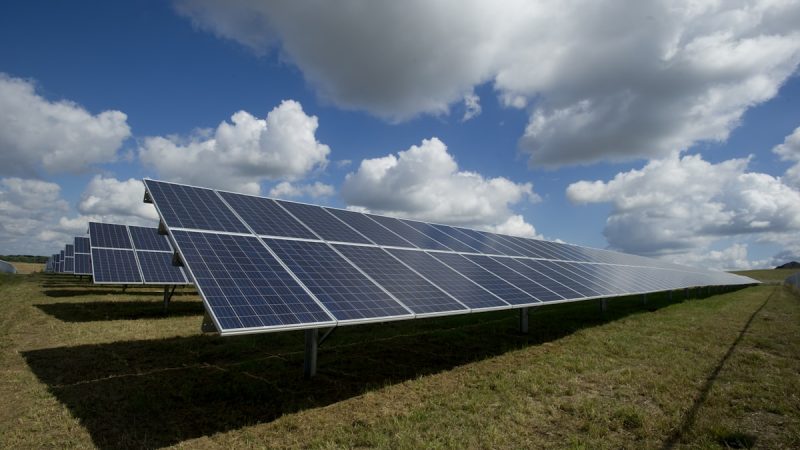
Solar Panels: Powering the World with Clean, Efficient, and Sustainable Energy
Discover how modern solar panel technology is transforming homes, businesses, and utility-scale power generation while driving the global transition toward cleaner, smarter, and more affordable renewable energy.

How Solar Panels Work
Solar panels convert sunlight directly into electricity using photovoltaic (PV) cells made primarily from semiconductor materials such as silicon. When sunlight strikes the surface of a solar cell, photons excite electrons inside the material, generating a flow of direct current (DC) electricity.
An inverter then converts this DC electricity into alternating current (AC), making it suitable for powering homes, offices, factories, and even electric vehicle charging stations.
Modern photovoltaic systems are designed to operate efficiently under various weather conditions while requiring minimal maintenance throughout their lifespan.
“Every ray of sunlight captured by a solar panel brings us one step closer to a cleaner, more sustainable future.”
— International Renewable Energy Council
Why Solar Panels Are Becoming More Popular
The adoption of solar panels has accelerated dramatically over the past decade due to falling installation costs, improved efficiency, and growing environmental awareness.
Governments worldwide are supporting solar energy through tax incentives, rebates, and renewable energy policies, making solar installations more accessible than ever before.
Businesses are also investing heavily in commercial solar systems to reduce operating costs and meet sustainability goals, while homeowners benefit from lower electricity bills and increased energy independence.
As electricity demand continues to rise, solar power has become one of the most practical and cost-effective renewable energy solutions available today.
Types of Solar Panels
Choosing the right solar panel depends on your energy needs, installation space, budget, and efficiency requirements.
Monocrystalline Solar Panels
Known for their sleek appearance and high efficiency, monocrystalline panels are manufactured using a single silicon crystal. They perform exceptionally well in limited roof space and offer excellent long-term durability.
Polycrystalline Solar Panels
Polycrystalline panels are manufactured from multiple silicon fragments, making them more affordable while still providing reliable performance for residential and commercial installations.
Thin-Film Solar Panels
Thin-film technology offers lightweight and flexible solar modules suitable for specialized applications, including portable devices, commercial rooftops, and building-integrated photovoltaics.
Benefits of Installing Solar Panels
Solar energy provides both environmental and financial advantages that continue to drive global adoption.
Key benefits include:
- Lower monthly electricity bills
- Reduced carbon emissions
- Increased property value
- Long operational lifespan (25–30 years)
- Low maintenance requirements
- Energy independence
- Quiet operation
- Government rebates and tax incentives
With advancements in photovoltaic technology, today’s solar panels produce more electricity while occupying less installation space than previous generations.
Solar Panels and Battery Storage
Solar panels generate the highest amount of electricity during daylight hours. By integrating battery storage systems, excess electricity can be stored and used during the evening, cloudy days, or power outages.
Modern lithium-ion battery systems allow homeowners and businesses to maximize self-consumption while reducing reliance on the traditional power grid.
This combination creates a more reliable and resilient energy solution capable of supporting both residential and commercial applications.
Smart Solar Technology
Today’s solar installations are becoming increasingly intelligent through the integration of digital technologies.
Smart solar systems include:
- AI-powered energy monitoring
- Real-time mobile applications
- Smart inverters
- Remote diagnostics
- Automatic fault detection
- Performance optimization
- Weather forecasting integration
- Predictive maintenance alerts
These innovations help maximize energy production while reducing maintenance costs and improving overall system reliability.
Challenges Facing Solar Energy
Although solar technology continues to evolve, several challenges remain.
These include:
- Initial installation costs
- Energy production during cloudy weather
- Space requirements for large installations
- Battery storage expenses
- Recycling photovoltaic materials
- Grid integration in aging electrical infrastructure
Continuous research and innovation are addressing these challenges, making solar energy more efficient and affordable each year.
The Future of Solar Panels
The next generation of solar panels will be lighter, more efficient, and capable of generating electricity in a wider range of environmental conditions.
Emerging technologies such as bifacial panels, perovskite solar cells, building-integrated photovoltaics (BIPV), and transparent solar glass are expected to redefine how buildings and infrastructure produce clean energy.
As smart cities, electric vehicles, and decentralized power systems become increasingly common, solar panels will play a central role in creating a sustainable, low-carbon future.
The transition to solar energy is no longer simply an environmental choice—it is becoming a smart economic investment for homeowners, businesses, and governments around the world.
Key Takeaways
✓ Solar panels convert sunlight directly into clean electricity.
✓ Modern photovoltaic technology offers higher efficiency and lower costs than ever before.
✓ Battery storage enables reliable power even after sunset.
✓ Smart monitoring systems improve performance and maintenance.
✓ Solar energy is one of the fastest-growing renewable energy sources worldwide.